What Production Reports Don’t Show
How small interruptions in material and information flow start determining delivery times
Sometimes a job begins to fall behind schedule even though nothing spectacular has happened in the process.
No technological error appeared.
There was no complaint or production stoppage.
And yet the process suddenly begins to lose time.
In previous analyses we showed how the lack of a common language and dead quality systems can generate hidden costs.
This time we will look at the process from a different angle.
Not through the lens of errors.
Through flow continuity.
Because in production a process rarely collapses because of one major problem.
Much more often it loses stability through small interruptions that almost never appear in reports.
Interruptions in the flow of information.
Interruptions in the flow of material.
Interruptions in decisions. When they start to accumulate, even a well-prepared production plan stops having meaning.
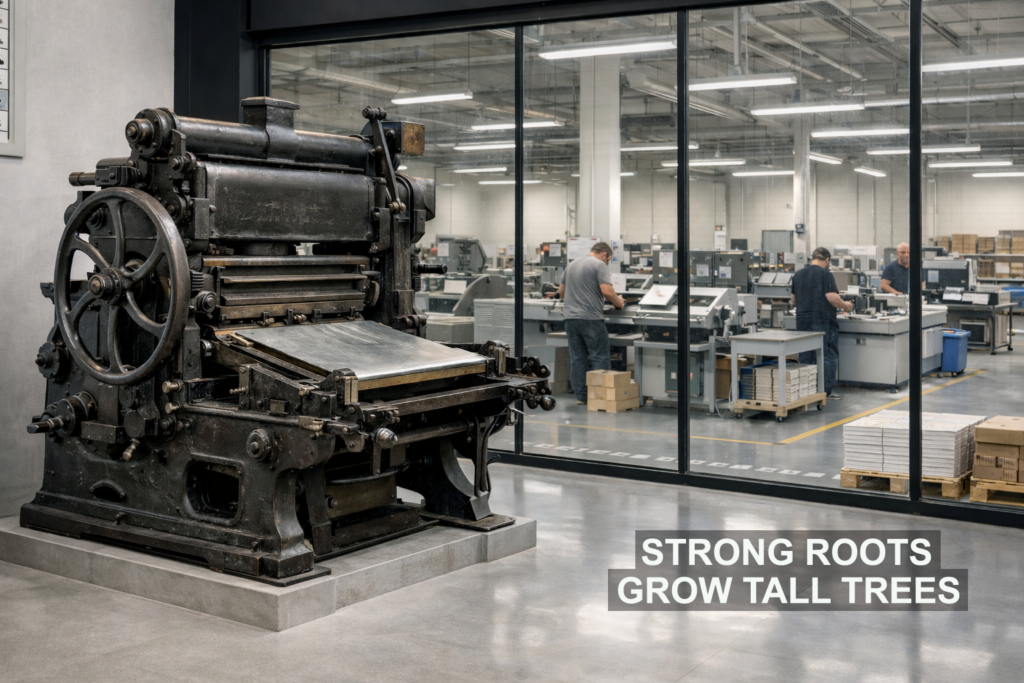
Strong foundations
A print shop that has been operating for years and retains its customers does not function by accident.
Behind every such company is an enormous amount of work done by people who built the process day by day.
Hundreds of decisions.
Thousands of corrections introduced after successive production experiences.
It is precisely this effort created the system that allows the company to deliver orders, maintain relationships with customers and develop the business.
If today there is room for further improvement, it does not come from the absence of a system.
Quite the opposite.
It comes from the fact that the organisation has reached a level at which it can afford to look more deeply at its own process.
Not to break it.
But to strengthen it.
Not through revolution.
Through evolution based on knowledge that already exists in the organisation.
Because the experience of operators, technologists and planners is not only operational practice.
It is an enormous resource of knowledge about how the process behaves in reality.
And this knowledge can be organised, named and used consciously.
Without changing the foundations of the system. Only raising the level of its understanding and control.
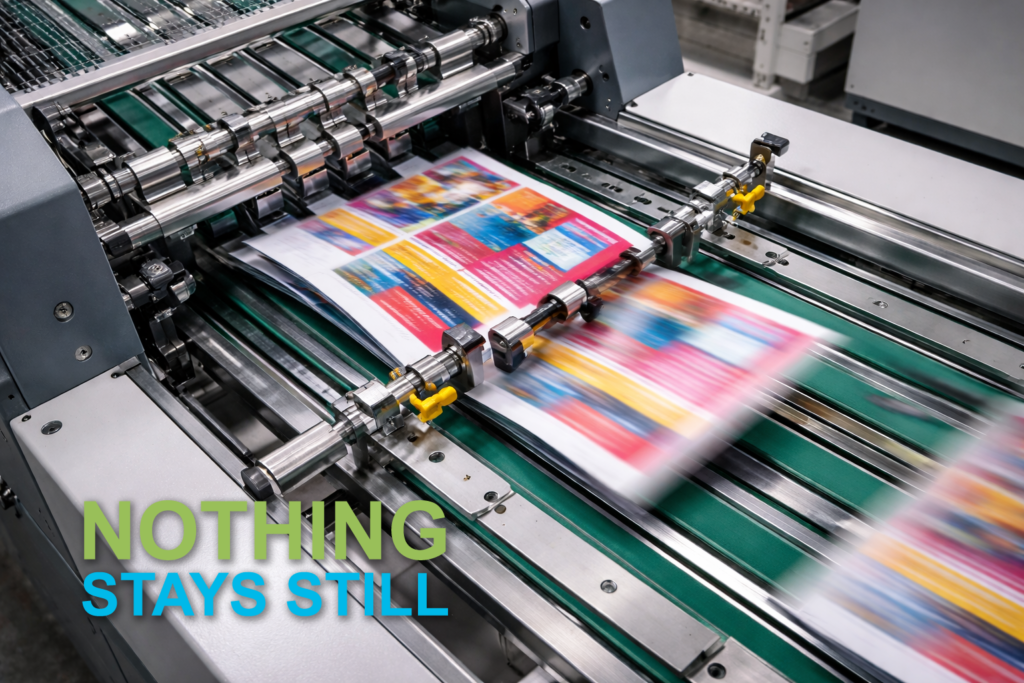
Process in motion
In production analysis, the most attention is usually given to errors.
Complaints.
Quality non-conformities.
Product defects.
That is natural. An error is visible and easy to name.
The problem is that it often creates a picture that does not reflect reality.
In reports, the process appears stable.
Operations are planned.
Materials are assigned to orders.
Deadlines are entered into the schedule.
Formally everything works exactly as we described earlier in the analysis of dead quality systems.
In reality, however, the production process operates as a sequence of flows.
The flow of materials.
The flow of information.
The flow of decisions.
And it is precisely within these flows that disturbances appear which are not visible in reports.
A few minutes of waiting for material.
Information that arrives too late.
A decision that has to pass through several levels of the organisation.
Individually, they seem like minor details.
But in a production process that consists of many successive operations, such small delays begin to accumulate.
Over time they start influencing the working rhythm of the entire system.
It is most visible in situations which, from a technical perspective, are not errors.
And yet they are able to disturb the entire course of production.
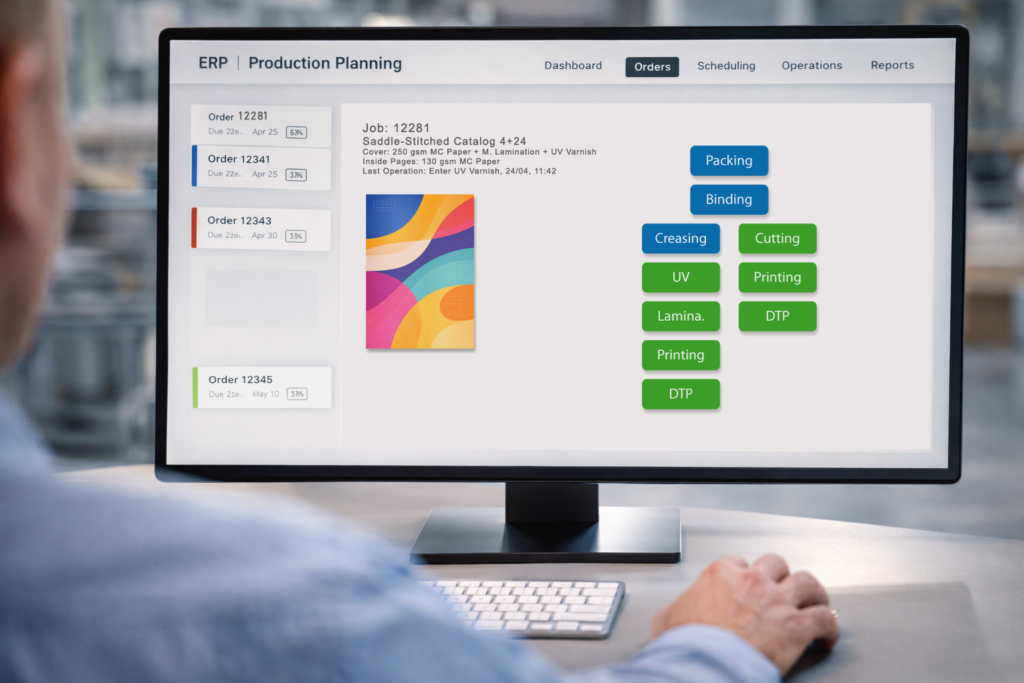
The Flow Paradox
In print shops, enormous attention is placed on paper efficiency.
Waste during printing.
Production overruns.
Production losses.
How to achieve the best sheet utilisation.
That is natural.
Paper is one of the largest costs in the entire production process.
That is why organisations optimise primarily what can be seen in numbers.
Volume.
And this is where the first paradox appears.
Thin papers, which often represent even 70–80% of production, move relatively easily through subsequent operations.
Full sheets can be prepared quite quickly for further processing.
Material moves easily between departments.
The process maintains its flow.
Thick papers usually represent a much smaller share of the volume.
At the same time they often pass through a much more complex technological path.
Let us analyse this using the example of producing a 24-page saddle-stitched catalogue with a cover and finishing.
The inner part of the catalogue passes through a relatively simple process.
Printing. Cutting. Stitching.
The cover takes a much longer path.
Printing. Foil lamination. UV varnish. Cutting. Scoring. Stitching.
Each of these operations is another point in the process.
Another place where the material may stop.
And this is exactly where the second layer appears: Time.
Paper, which represents a smaller share of the production volume, often passes through the longest and most sensitive technological path.
More operations.
More critical points.
More moments in which the flow may be interrupted.
That is why process analysis cannot rely solely on material efficiency.
It must also consider the time flowing through the process.
It is precisely the combination of these two perspectives that creates the dual path of process rigour regulation. The standard path of fast flow.
And the path of increased diagnostic rigour.
Give me what I need
It is worth looking at the process from a different angle.
Not from the production level.
From the customer’s perspective.
The customer does not see imposition.
Does not see lamination.
Does not see the next technological operations.
Sees one thing.
The delivery date.
Trust builds slowly.
Just as climbing a high mountain takes time.
One moment of inattention is enough to find yourself very quickly at the bottom.
In the printing industry exactly the same mechanism works.
It does not matter how well a catalogue is produced if it does not reach the customer on time.
Of course time is not always the absolute priority.
Not every customer needs every job delivered at exactly the same time.
But this knowledge becomes crucial for managing the process.
In one of the projects I was responsible for, the operational goal was simple.
98% of orders delivered on time.
Under normal conditions this was a level that could be maintained.
The problem appeared when production conditions began to change.
Machine failure.
Delay in material delivery.
Stopping of the process at one of the production stages.
At such moments the most important thing was one thing.
A signal from the process itself.
If the right information appeared early enough, it was possible to trigger a reaction.
Customer service contacted clients whose orders might be delayed.
Some of them accepted a new delivery date.
For others the deadline was critical.
This information made it possible to set production priorities differently.
Without a signal from the process only one thing remains.
Waiting for the outcome.
With a signal the situation can be managed.
And that is exactly why observing the process in its real course is so important.
Because it allows reaction before the problem becomes visible in the final report.
Rhythm allows time to be protected.
Rhythm of operations.
Rhythm of material flow.
Rhythm of information flow.
Rhythm of decision flow.
If the rhythm of the process is maintained, the job reaches the customer when it should.
Rhythm protects the customer experience.
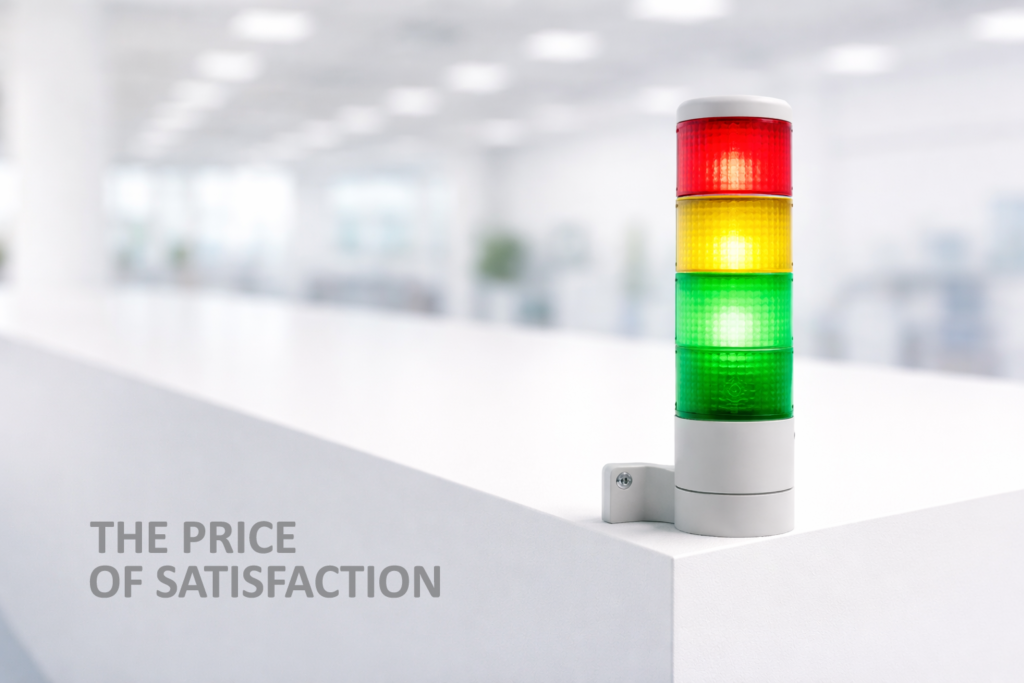
How to protect time?
Maintaining the rhythm of the process is not the task of one person.
It is also not about the manager analysing every situation independently.
The role of the manager is something else.
Creating a system that allows the process to react.
The operator sees the problem first.
The leader assesses its impact on the current operation.
The response cell receives the agreed signal and activates the mechanism defined in the system.
As mentioned earlier:
Contact with the customer.
Collecting feedback information.
Passing the signal to the appropriate reaction point in the process.
Information does not have to travel through the entire organisational structure.
It must reach the place where a decision can be made.
That is why effective process management is not about collecting the largest possible number of reports.
It is about building mechanisms that allow the process to speak.
Signals from operations.
Clear reaction rules.
A short information path.
The manager does not have to be present at every point of the process.
The manager must create a system that allows the team to react before the problem turns into a delay for the customer.
Because process stability does not start with control.
It starts with the architecture of decisions.