
Project 136%
High-precision automotive screen printing on thermoformable film
Starting Point
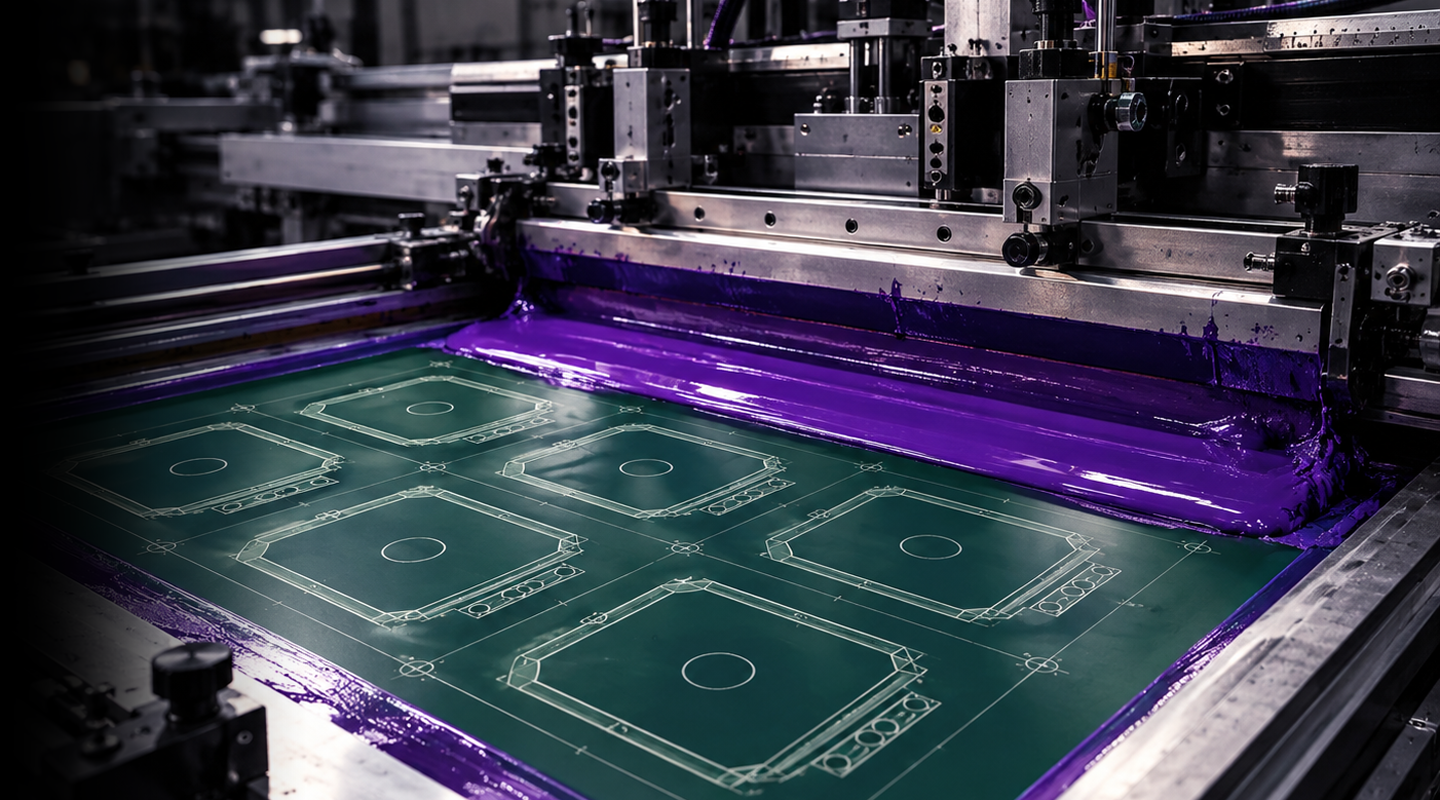
The product required five print colours plus a preheat pass used to stabilise the thermoformable film before printing.
Each colour was printed separately. Screen washing, setup and preparation took around 20 minutes, while OEE was approximately 46%.
At the same time, the thermoformable film was the most expensive material in the process.
The project therefore started from two questions:
How can we use more of the material we already buy?
And how can we make better use of the machine time we already have?
Material and Layout
The thermoformable film was the most expensive material in the process, so the layout could not be enlarged at the cost of higher material waste.
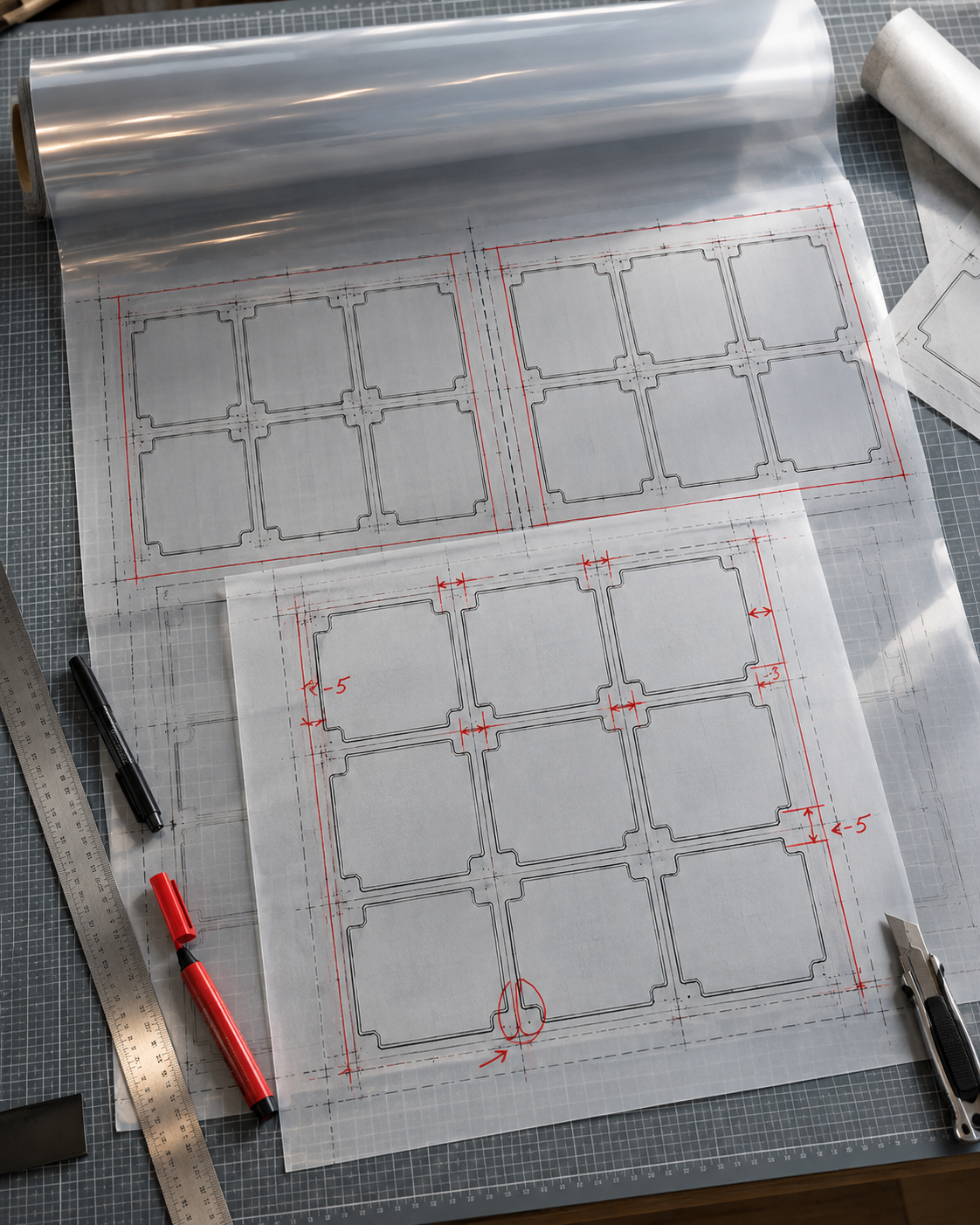
The original roll width was already being used efficiently. The challenge was therefore to increase the number of parts per sheet while still staying within the maximum printable area of the press and preserving the best possible use of the film.
By rotating the artwork by 90 degrees, reducing unnecessary margins and redesigning the sheet geometry, the layout increased from 6 to 9 parts per sheet.
The key was not simply to make the sheet larger.
It was to use the available film and the available print area better at the same time, without increasing material waste or creating additional work in the following production stages.
Adapting the Process
Once the layout changed, the press had to follow.
The larger format and higher operating speed required changes to transport, tensioning, the squeegee system, flood bars, registration and machine geometry.
Drying parameters also had to be adapted.
The objective was not only to increase machine speed, but to make the entire printing setup work reliably under the new conditions.
Ink as the Moving Variable
Increasing production speed changed the behaviour of the ink during printing.
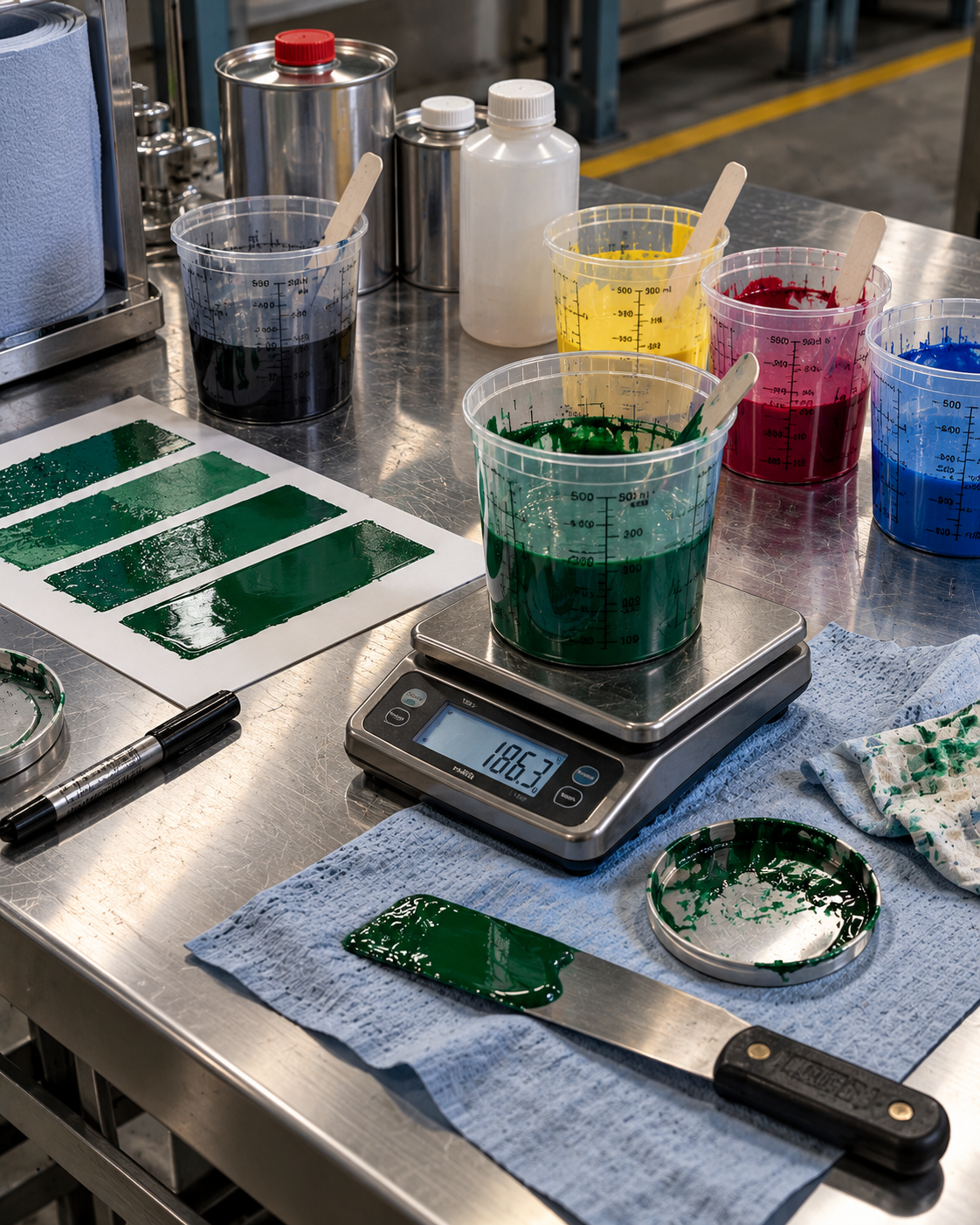
Ink viscosity, screen flooding and ink transfer became critical variables affecting print stability and repeatability.
The challenge was to maintain consistent ink deposition and print quality while reducing interruptions and manual corrections.
This required adjustments to ink preparation, process parameters and operator working methods.
The goal was not simply to print faster, but to maintain a stable and repeatable process at the higher production speed.
From Method to Standard
Improving the machine was only part of the project. The new production method also had to be repeatable across operators and shifts.
Setup parameters, working sequences and process adjustments were standardised to reduce variation between production runs.
Operators were involved in testing the new method, identifying practical problems and refining the working instructions.
The objective was to make the improved process independent of individual experience and ensure that the results could be maintained in daily production.
Result
The project was implemented over eight months. Machine modifications cost less than €5,000, excluding production materials.
Production increased from 2,400 to 6,300 finished parts per shift.
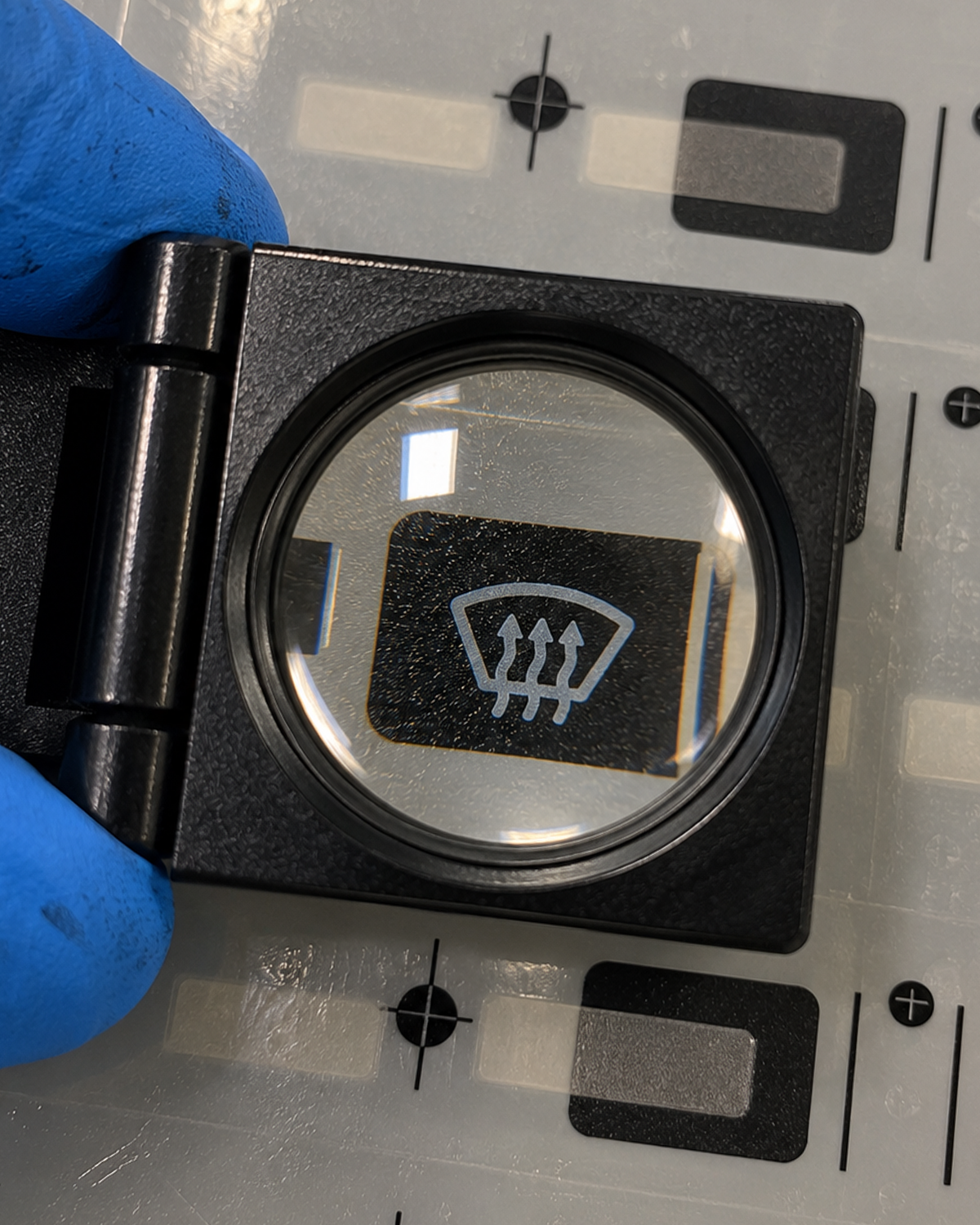
The number of parts per sheet increased from 6 to 9. Print quality was maintained without increasing material waste or creating additional workload in subsequent production stages.
What Changed
The improvement did not come from one major investment. It came from connecting material layout, machine capability, ink behaviour and operator working methods into one repeatable production process.
The result was not simply a faster machine. It was a more efficient production system, capable of delivering higher output with the same quality and without increasing material waste.